

Nissan Altima vs. Toyota Camry
Sedan Showdown: Nissan Altima vs Toyota Camry
When you’re shopping for a reliable, comfortable sedan, two names often rise to the top: the Nissan Altima and the Toyota Camry. Both have built strong reputations for everyday dependability, fuel efficiency, and family-friendly features — but they each bring something different to the road.
So, how do you decide between the Nissan Altima vs. Toyota Camry? At Stephen Wade Nissan, we’re here to help drivers explore their options and find the right car. Keep reading this guide to compare performance, comfort, technology, safety, and overall value between the Nissan Altima and Toyota Camry to hopefully find the right match.
Performance, Engine Options & Fuel Efficiency
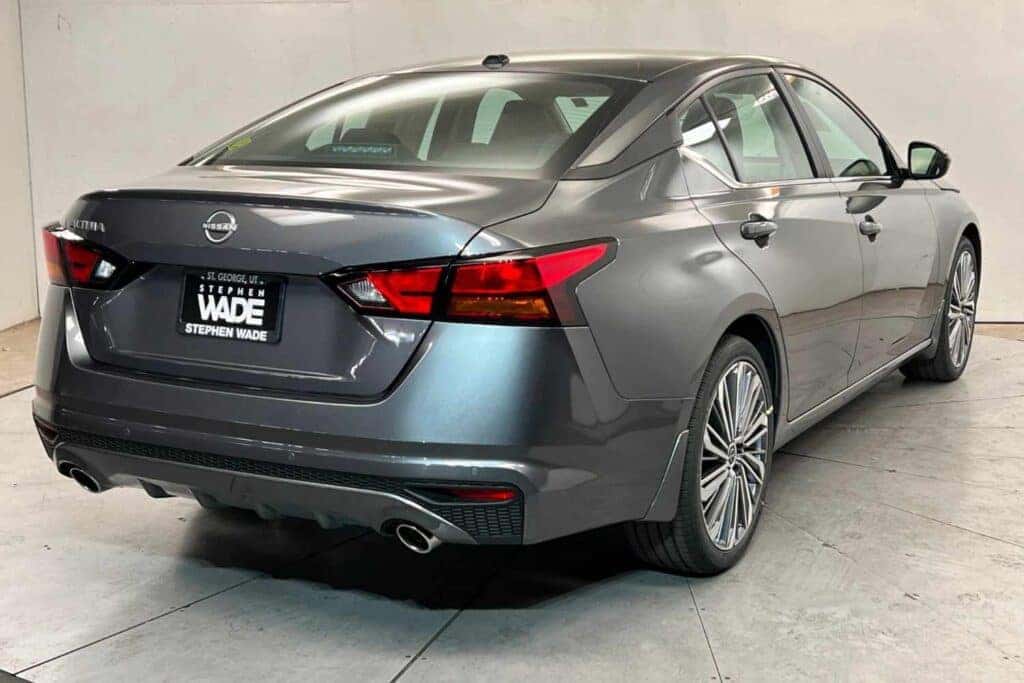
The biggest mechanical difference between these two competitors lies under the hood. For the 2026 model year, Toyota has moved the Camry entirely to a hybrid-only platform. Meanwhile, the 2026 Nissan Altima leans into its dependable, smooth-accelerating, naturally aspirated 2.5-liter DOHC 4-cylinder engine.
- 2026 Nissan Altima Powertrain: The standard 2.5-liter engine pairs with an Xtronic continuously variable transmission (CVT), generating 188 horsepower and 180 lb-ft of torque on front-wheel-drive (FWD) models. For enhanced traction during seasonal downpours or light winter weather, Nissan offers an available Intelligent All-Wheel Drive (AWD) system, which dynamically routes power to the wheels with the most grip.
- Toyota Camry Powertrain: The Camry uses a 2.5-liter four-cylinder hybrid setup providing 225 horsepower on FWD variants and 232 horsepower with its optional electronic AWD system.
When looking at the Nissan Altima MPG ratings, the vehicle remains exceptionally efficient without needing complex hybrid components. The front-wheel-drive configurations achieve an impressive EPA-estimated 26 city / 36 highway / 30 combined MPG. This makes it a stellar option for long stretches on I-15. The Camry does hold a slight edge in pure city fuel economy due to its electric components. However, the lower initial purchase price of the Altima often offsets that hybrid savings window for many shoppers.
Interior Comfort, Cabin Space & Everyday Practicality
If you spend considerable time commuting around St. George, the quality of your cabin environment is paramount. Step inside both vehicles, and you will notice a distinct approach to interior layout.
The Nissan Altima interior prioritizes long-distance ergonomics with its standard Zero Gravity front seats. These seats use continuous support styling inspired by space travel to help reduce fatigue on extended road trips. Taller drivers will immediately appreciate the 43.8 inches of front legroom in the Altima, compared to just 42.1 inches in the Camry.
Plus, the Altima boasts a larger 15.4 cubic feet of trunk space paired with 60/40 split-folding rear seats. The Camry offers a slightly smaller 15.1 cubic feet trunk capacity. For a premium comparison context, the Altima layout borrows executive-level styling elements often reminiscent of the classic Nissan Maxima interior, delivering soft-touch points and premium cloth or available leather configurations.
Technology, Infotainment & Connectivity Experience
Today’s vehicles are designed to do more than just get you where you need to go. Both the Nissan Altima and Toyota Camry offer modern technology features that make everyday driving easier. Depending on the trim level you choose, you can enjoy:
- Touchscreen infotainment displays for easy access to vehicle settings and entertainment
- Apple CarPlay® and Android Auto™ integration to connect your smartphone
- Bluetooth® connectivity for hands-free calls and audio streaming
- USB ports to help keep your devices powered up
- Available premium audio systems for a more immersive listening experience
- Voice controls that help you stay connected while keeping your focus on the road
Ride Quality, Handling & Driving Experience
The driving dynamics of the Altima balance quiet comfort with athletic road mannerisms. Thanks to an advanced front strut and multi-link rear suspension layout, the Altima filters out pavement imperfections seamlessly.
If you prefer a highly engaging feel behind the wheel, the Altima SR trim upgrades your commute with a specialized sport-tuned suspension and steering wheel-mounted paddle shifters. It also incorporates Active Ride Control and Intelligent Trace Control, which subtly applies individual brakes around tight canyon corners to keep the vehicle tracking smoothly. The Toyota Camry offers a similarly comfortable ride with predictable handling and a reputation for dependability.
The best choice depends on your personal driving style. Some drivers prefer the Altima’s combination of comfort and available performance options, while others may lean toward the Camry’s efficiency-focused approach.
Pricing, Reliability & Overall Value for Money
Historically, the Altima preserves lower MSRP pricing while packing in modern conveniences. Because Toyota forces buyers to purchase its hybrid powertrain on every single Camry configuration, the base price of entry for a Camry is typically significantly higher. The 2026 Nissan Altima provides an exceptionally well-rounded, reliable alternative that leaves more money in your pocket up front.
Experience the 2026 Nissan Altima in St. George, UT
While the Toyota Camry is a reliable hybrid commuter, the 2026 Nissan Altima delivers superior front-row legroom, iconic Zero Gravity seat comfort, a massive 12.3-inch infotainment display, and a conventional gasoline powertrain that keeps purchase prices highly accessible.
Explore our online showroom to view current pricing on all new Nissan Altima configurations. You can also check out our online tools to get pre-approved for financing or value your trade-in from the comfort of your home. Stop by Stephen Wade Nissan in St. George today, and let our friendly local team find the perfect sedan for your lifestyle!
FAQs
Is the Nissan Altima Larger Inside Than the Toyota Camry?
Yes, the Nissan Altima provides more front legroom (43.8 inches vs. 42.1 inches) and a slightly larger cargo trunk (15.4 cubic feet vs. 15.1 cubic feet) than the Toyota Camry.
How Does the Nissan Altima Fuel Economy Compare to Non-Hybrid Midsize Cars?
The Nissan Altima MPG ratings are highly competitive for its class. Standard front-wheel-drive configurations achieve an impressive EPA-estimated 26 city / 36 highway / 30 combined MPG using regular unleaded fuel.
Will the Nissan Altima Hold Its Value Well if I Trade It in Later?
Yes, its reputation for engine reliability, excellent real-world fuel economy, and the high demand for affordable, non-hybrid commuter cars in the pre-owned market keep trade-in values strong.
Is the Nissan Altima Expensive to Maintain Compared to a Camry?
No, the Altima is typically less expensive to maintain over the long haul than a hybrid vehicle. Because it uses a traditional gasoline powertrain, it avoids the complex electronics, specialized dual-motor systems, and eventual high-cost battery replacements associated with the hybrid-only Camry.
Can I Comfortably Fit Car Seats or Adult Passengers in the Back Seat?
Absolutely. The Altima offers a spacious rear bench with 35.2 inches of rear legroom and wide-opening rear doors. This layout makes it easy to install rear-facing or forward-facing child safety seats and comfortably accommodates adult passengers on weekend road trips.